DoorMaster User Guide
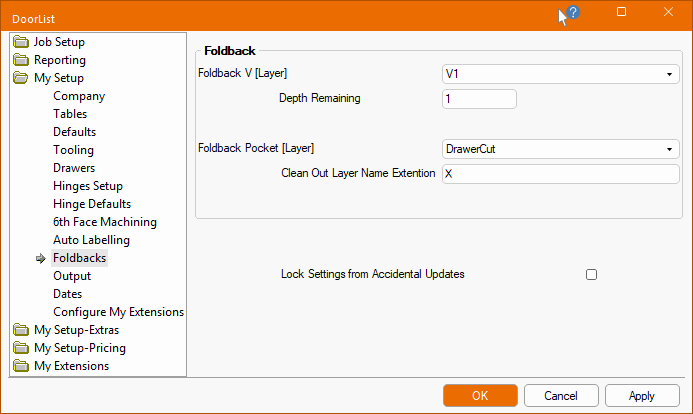
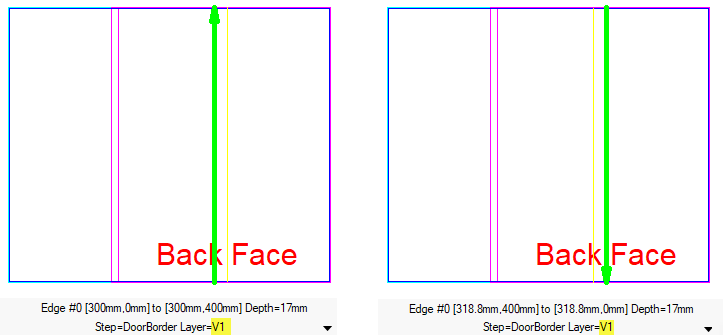
The My Setup > Foldbacks page allows you to set the layer names of the "V" grooves and the pocketing tool paths.
A foldback door (often called a bifold or concertina door) is a door system with multiple hinged panels that fold back on themselves when opened.
The term "V" in this context usually refers to a specific type of commercial or industrial folding door, or the "V-groove" style of the panel profile.
A V-groove on a door refers to the sharp, distinct V-shaped lines or grooves routed into the surface of a door panel for decorative purposes. This gives a more defined look and adds depth to the door's design, but it is a stylistic element, not an operational type.
A foldback pocket on a door is a mechanism, typically using specialised hardware like Harmon hinges or pocket door slides, that allows a door to open and then slide or pivot into a concealed space (a "pocket") within an adjacent wall or cabinet carcass.
This design is a space-saving solution that keeps the door entirely out of the way when open, unlike a traditional hinged door that requires floor space to swing open. It is often used in kitchens to hide appliance garages, pantries, or home office nooks, creating a clean, seamless, and clutter-free appearance.
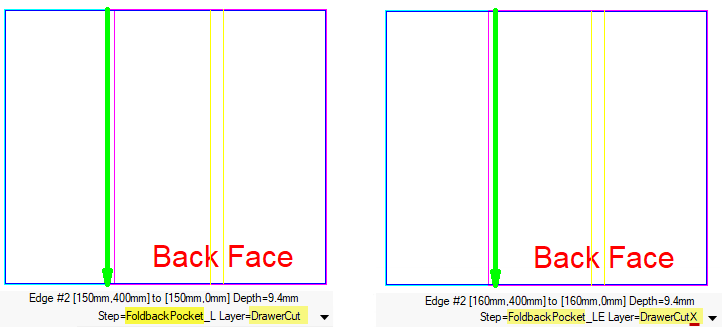
Clean Out is a continuous (triangular) toolpath into each corner to allow a small tool to get in and clean the corner out.
The layer name for the Clean Out is the same as the pocket, but appended with the chosen layer name extension e.g. X (see below right)